



Can-Explore provides a turnkey service for culverts managed by Quebec municipalities and Regional County Municipalities (RCMs), based on the evaluation methods and rating grids of the Ministère des Transports et de la Mobilité durable (MTMD, formerly MTQ). Our engineering team can handle design, inspection, diagnostics, construction site supervision, post-construction validation, and the inventory of new culverts, all under one roof.
What types of culverts can we inspect?
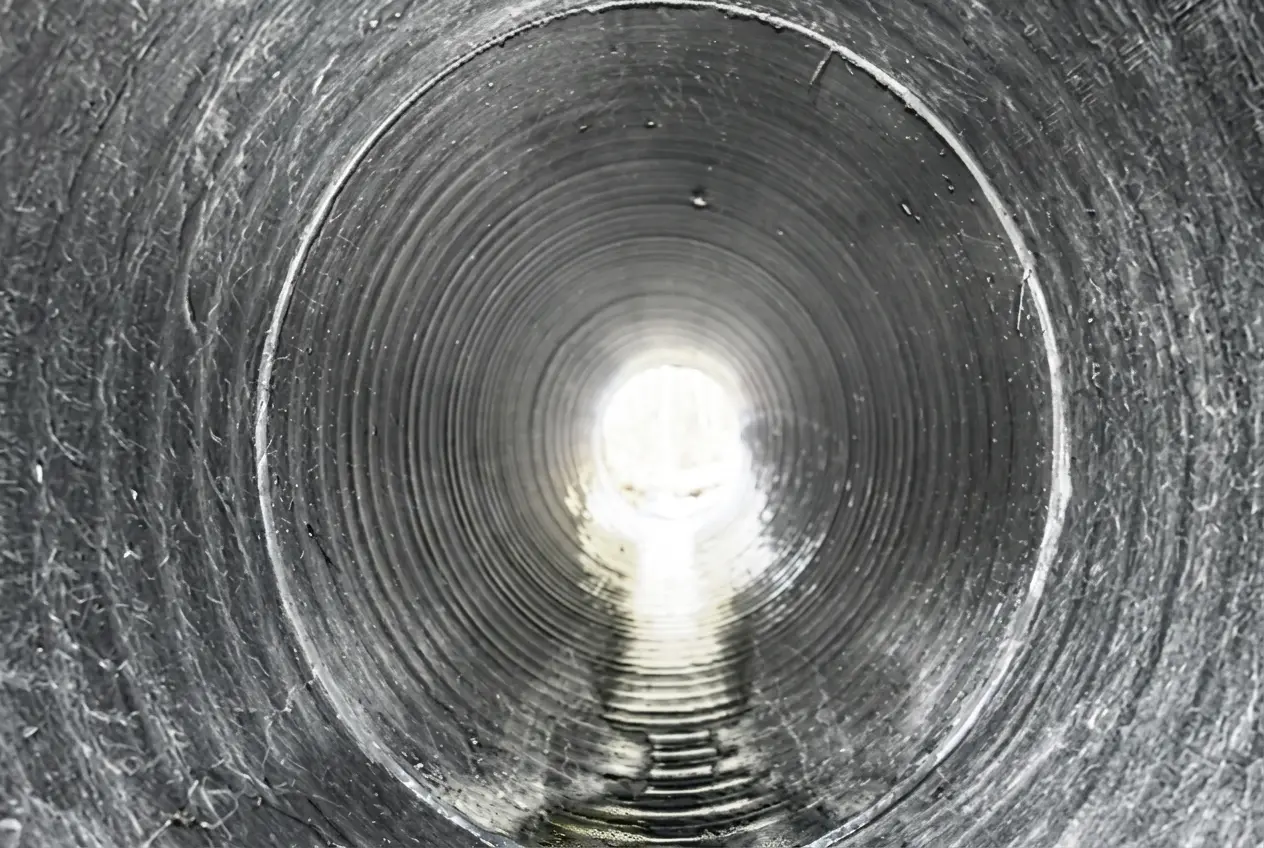
We inspect culverts ranging from 200 mm to 3 m in diameter across all material types, including concrete, corrugated steel pipe (CSP), and polyethylene.
We also operate in more challenging environments, such as partially or fully submerged culverts (subject to accessibility and turbidity assessments), large-diameter structures in confined spaces, and culverts located within industrial railway rights-of-way.
Are your culverts part of a broader storm sewer network?
Check out our municipal storm sewer inspection service page.
How does a culvert inspection with Can-Explore work?
Depending on your needs, our mandates can include up to five steps, from preparation to the final engineering report:
1. Mandate Preparation
Together with you, we establish the list of culverts to inspect based on your inventory, the MTMD inventory, your plans, and/or reported issues. We then plan access logistics, safety measures, and the optimal timing based on water flow rates.
2. Selecting the Access Method
We use self-propelled crawler cameras to inspect small-diameter culverts. For larger diameters, our inspectors enter the structure when safety conditions allow. For partially or fully submerged culverts, we deploy a remotely operated underwater vehicle (ROV), subject to adequate accessibility and low turbidity.
3. Inspection and Documentation
The inspector completes the MTMD inspection form and documents the condition of the structure with photos and video, covering the interior as well as the inlet and outlet.
4. Engineering Analysis
A member of our engineering team reviews the footage, assesses the structural condition and hydraulic capacity of the structure, and determines the Culvert Condition Index (Indice d’état du ponceau – IEP).
5. Report with Engineering Recommendations
The report outlines the observed condition for each culvert, its IEP score, and a recommendation where required (monitoring, maintenance, repair, or replacement). It also provides a priority ranking to support your asset planning.

What happens after the inspection?
Following the inspection, our engineering team can seamlessly take over to design the solution, saving you from having to start over with another supplier. We assess the structure’s hydraulic capacity, design the repair, rehabilitation, or replacement solution, and prepare the necessary engineering documents for construction.
Finally, we can schedule follow-up inspections to monitor how the condition of these culverts evolves over time.
Can inspections support your grant applications?
Yes, an inspection documented in accordance with MTMD standards can support your project planning and funding applications. However, expense eligibility always depends on the specific program, stream, and terms in effect.
Local Road Assistance Program (Programme d’aide à la voirie locale – PAVL)
Les inspections de ponceaux peuvent appuyer la planification et la demande d’aide financière dans le cadre du Programme d’aide à la voirie locale (PAVL) du MTMD, notamment pour les réseaux locaux de niveaux 1 et 2. L’admissibilité précise des dépenses doit être validée selon le volet et les modalités en vigueur.
Local Road Infrastructure Intervention Plans (Plans d’intervention en infrastructures routières locales – PIIRL)
Les plans d’intervention en infrastructures routières locales, réalisés par les MRC dans le cadre du PAVL, prévoient l’inspection des ponceaux du réseau local. Nous pouvons réaliser ces inspections pour votre MRC ou pour la firme qui prépare le plan.
Gas Tax and Quebec Contribution Program (Programme de la taxe sur l’essence et de la contribution du Québec – TECQ 2024–2028)
Selon la nature des travaux, les interventions sur les ponceaux peuvent être admissibles dans le cadre de la TECQ 2024-2028, sous réserve des règles et des annexes du programme. Nos rapports peuvent vous aider à documenter vos besoins et à appuyer votre programme.
Why entrust your culvert inspections to Can-Explore?
A single team covers the entire lifecycle of your culverts, from initial design through post-construction inspection:
Recognized expertise in Quebec municipal infrastructure
Our field expertise and deep understanding of municipal infrastructure management challenges allow us to support asset managers across Quebec in their decision-making.
The right equipment for every structure
Our crawler cameras allow us to inspect culverts under varied conditions. For large-diameter culverts that are not submerged, inspections can be carried out directly by an inspector physically entering the structure when safety conditions permit.
Accredited inspectors
All of our inspectors are members of the Ordre des ingénieurs du Québec (OIQ), hold MTMD accreditation, and document every structure using its official inspection form.
Planifiez l’inspection de vos ponceaux avec notre équipe dès aujourd’hui
Envoyez-nous la liste de vos ouvrages, ou simplement le secteur à couvrir.
Un membre de notre équipe vous proposera une approche et vous fera parvenir une soumission.